
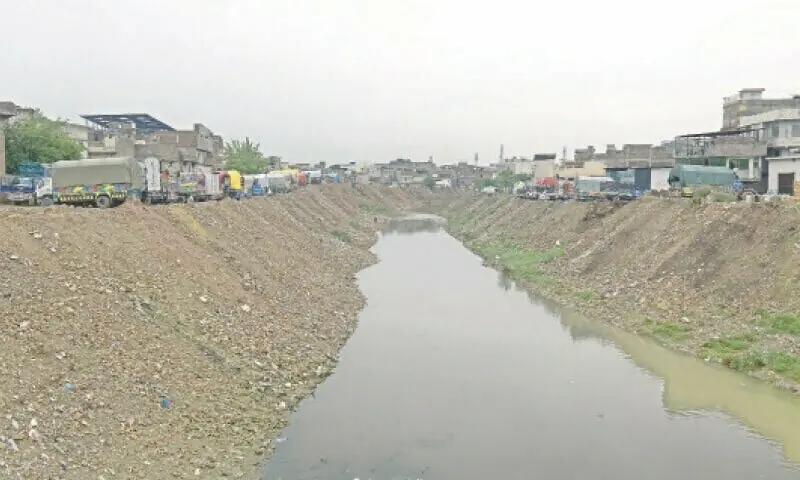
Punjab spending Rs200bn on longstanding drainage problems
LAHORE: The government has launched large-scale development projects under the Punjab Development Plan with Rs200 billion for addressing longstanding sewerage and drainage challenges across multiple districts, according to a report compiled by the Punjab Water and Sanitation Authority (Pwasa).
According to the report, the phase-1 of the CM’s Punjab development programme had planned projects worth approximately Rs200 billion for the housing, urban development and public health engineering department to improve municipal services and reduce urban flooding risk during the monsoon season.
The report said that work had already commenced in several districts, including Jhang, Dera Ghazi Khan, Gujrat, Hafizabad, Jhelum, Okara, and Sargodha, with additional areas expected to follow as implementation gathered pace.
The plan includes laying of nearly 1,610 kilometres of new sewerage pipelines, alongside the rehabilitation of around 741 kilometres of aging networks that had long struggled to meet the demands of expanding urban populations.
“Very complex engineering is involved in such projects — from layout to design, soil studies, levels, connectivity and gravity amid carrying sewage water from a household to a water body. It requires lateral sewerage to secondary and trunk sewerage lanes that lead to disposal stations 40 to 50 feet deep, and pumping the same back up in drains to finally throw it in a water body,” explained Housing Secretary Noorul Amin Mengal while talking to Dawn.
To strengthen stormwater management, authorities had proposed the construction of 92 kilometres of main drains and more than 108 kilometres of roadside drainage channels. These measures were expected to improve water flow during heavy rainfall and to help mitigate recurring incidents of waterlogging in low-lying urban areas.
The report further states that 27 new disposal stations are being established across the 15 districts, while 59 existing stations will be restored to full operational capacity.
In selected locations, mega storage tanks are also being developed to retain excess rainwater and ease pressure on drainage systems during peak monsoon periods. The rollout of the programme follows the establishment of Wasas across Punjab, enabling the respective district agencies to undertake execution of the development works.
“Upgrading sewerage and drainage infrastructure is not merely a construction exercise; it is fundamental to protecting cities from climate-related stresses and ensuring reliable municipal services for decades,” he said when inquired about the progress.
He said that the sustainable construction models were being adopted so that roads and streets reconstructed after sewerage installation would have greater durability and reduced maintenance requirements.
“Our objective is to build systems that serve future generations, rather than temporary fixes that require repeated intervention,” he added.
It may be mentioned that cities in the province, especially Lahore, have faced increasing pressure from rapid population growth, unplanned expansion, and changing weather patterns.
Experts argue that investments in drainage and sewerage are critical not only for public health but also for economic productivity, as frequent flooding can disrupt commercial activity and damage infrastructure.
“Balanced development across districts remains central to the government’s strategy,” the secretary said, adding that equitable infrastructure expansion would support safer and more sustainable urban environments throughout Punjab.