
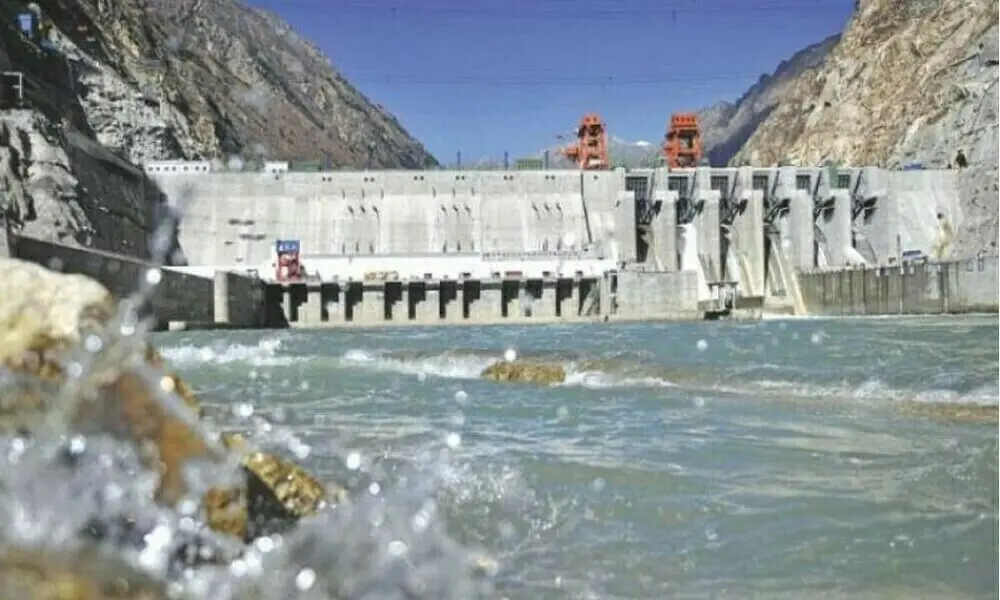
Dasu project: World Bank flags execution and macroeconomic risks
ISLAMABAD: The World Bank has flagged mixed performance in the execution of Pakistan’s strategically vital Dasu Hydropower Stage-I project, warning that while overall implementation remains on track, progress toward key development objectives has slipped to moderately satisfactory, highlighting rising execution and macroeconomic risks.
In its latest Implementation Status and Results Report, the Bank maintained that overall implementation progress is “moderately satisfactory,” but downgraded progress toward achieving the project’s development objectives from “satisfactory” to “moderately satisfactory.” The project continues to carry a “high” overall risk rating, reflecting persistent governance, macroeconomic, and institutional capacity challenges.
The Dasu project — a flagship 2,160-megawatt run-of-river hydropower scheme on the Indus — is central to Pakistan’s long-term energy security strategy. Once completed, it is expected to generate 12,225 gigawatt-hours annually, providing low-cost, non-carbon renewable electricity and easing the country’s chronic power shortages.
Despite its strategic importance, the report highlights that tangible output remains elusive. As of early 2026, electricity generation from the project is still at zero, as construction has yet to reach completion.
Key performance indicators, including renewable energy capacity enabled and power units installed, also remain at baseline levels, underscoring delays in translating financial and construction inputs into actual energy supply.
On-ground progress presents a mixed picture. Construction of the main hydraulic structure has reached just over 29 percent, while work on power generation facilities stands at around 19 percent completion. Preparatory infrastructure, including roads and relocation works, is relatively more advanced, though still short of full completion.
Meanwhile, the critical 765 kV transmission line — essential for evacuating power from Dasu to Islamabad — has yet to record physical progress, despite contractor mobilization beginning in 2023. This lag raises concerns over potential bottlenecks even if generation capacity comes online on schedule.
The Water and Power Development Authority (WAPDA), the project’s implementing agency, is also facing capacity constraints. The report notes limited progress in building institutional capability to prepare future hydropower projects — a key objective of the initiative.
The World Bank has committed billions of dollars through a mix of IDA credits, IBRD loans, and guarantees. A fresh USD1 billion financing package approved in 2024 — and signed in 2025 — aims to sustain construction momentum. However, disbursement levels vary widely across financing instruments, with some loans barely utilized, reflecting implementation bottlenecks.
The report also draws attention to macroeconomic pressures, particularly currency depreciation, which is affecting project cost dynamics and private capital mobilization. Pakistan’s broader economic fragility continues to pose a high risk to timely project execution.
On the social front, the project has made measurable gains. Over 22,000 people in the project area have reportedly benefited from improved socio-economic services, already exceeding initial targets. Community engagement indicators, including grievance redressal and women’s participation in income-generating activities, show steady progress, although some local development plans lag behind schedule.